


Behind the Music: How Learning Environments Shape Music Programs

Behind the Music: How Learning Environments Shape Music Programs
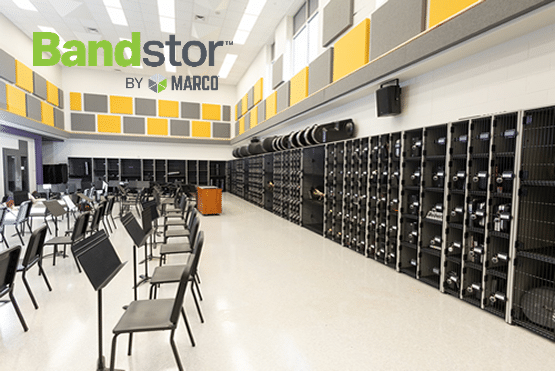
At Bandstor by Marco, we’re passionate about music education—and about the spaces that quietly support it. Great music programs aren’t built on instruction alone—they’re shaped by the environments where students rehearse, move, store instruments, and learn how to work together.
Band rooms are some of the most demanding spaces in a school. They’re active, loud, fast-moving, and shared by many students throughout the day. Yet, the design decisions that matter most in these rooms—storage, organization, circulation, durability—are often treated as afterthoughts. When that happens, the space starts working against the program instead of supporting it.
Bandstor by Marco is about flipping that script. It’s about understanding how thoughtful design can improve focus, safety, and long-term success—without calling attention to itself.
Organization Sets the Tone
Before a teacher speaks or a conductor raises a baton, the environment is already communicating expectations.
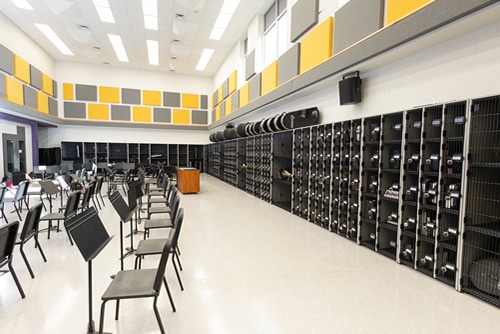
Clear organization helps students understand where instruments belong, how to move through the room, and how to transition efficiently between activities. When storage is intuitive and consistent, class starts faster. Transitions take less time. And students spend more of their energy on music—not logistics.
Band rooms are busy by nature. Students are processing sound, movement, and instruction all at once. When the environment adds visual clutter or confusion, focus drops. When the space is clear and predictable, students settle in faster and stay engaged longer.
We often hear from educators that well-organized storage changes the feel of the room. Students take more ownership. Behavior issues decrease. The space feels calmer—even when it’s full. That’s not about control. It’s about clarity. When expectations are built into the environment, classroom management becomes easier and instruction flows more naturally.
Safety Happens in the Details
Music rooms are high-movement environments. Students lift, carry, turn, and store large, sometimes bulky instruments throughout the day. Most safety issues don’t happen during seated rehearsal—they happen during transitions.
Large instruments shift balance and posture, especially for younger students. Poorly designed storage forces students to overreach, twist, or rush. Tight aisles and unstable systems increase the risk of drops, tip-overs, and strain.
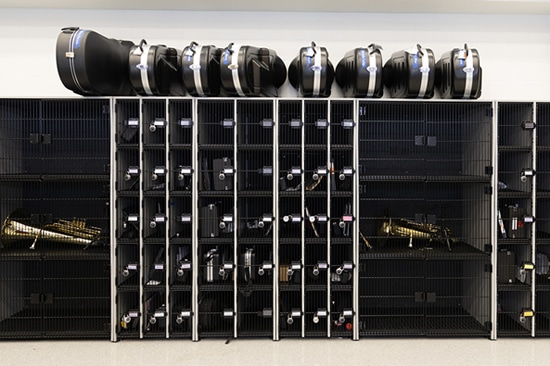
Thoughtful storage design supports safer handling by giving students predictable, stable points of contact. Proper reach zones, accessible heights, and clear circulation paths reduce physical strain for students and staff alike.
Inclusive design matters here, too. When storage systems are usable by a wide range of students, independence increases and risk decreases. Safety isn’t a separate feature in music spaces—it’s built into every interaction with the room.
The Costs You Don’t See Right Away
The true cost of a music space isn’t measured on installation day. It shows up over time.
Storage systems that aren’t built for daily use lead to frequent maintenance, early replacement, and damaged instruments. Maintenance is often the biggest hidden cost. Loose hardware, sagging shelves, and unstable frames create a cycle of service calls and temporary fixes that add up quickly.
Instrument damage compounds the problem. When storage loses alignment or no longer supports instruments properly, repairs become routine. That affects budgets—and instruction.
Durability matters because it protects organization over time. When systems hold up, maintenance demands decrease, instruments last longer, and the space continues to function the way it was intended. That consistency is where real value lives.
Designing for Change
Music programs don’t stand still. Enrollment shifts. Instrumentation changes. Rooms are shared between band, choir, and ensemble use. Spaces designed for one moment in time rarely keep up.
Future-ready music spaces are designed to adapt. Flexible layouts and modular systems allow programs to grow and evolve without requiring renovation or full replacement. That adaptability preserves investment while maintaining organization and flow.
We see this across schools of all sizes. Smaller programs benefit from storage that allows one room to do more. Larger programs rely on scalable systems to manage complexity over time. In both cases, flexibility supports longevity.
Future-proofing isn’t about predicting every change. It’s about designing systems that can respond to change without disruption.
Why Construction Quality Matters
Construction quality doesn’t draw attention when it’s done right—but you notice when it’s not.
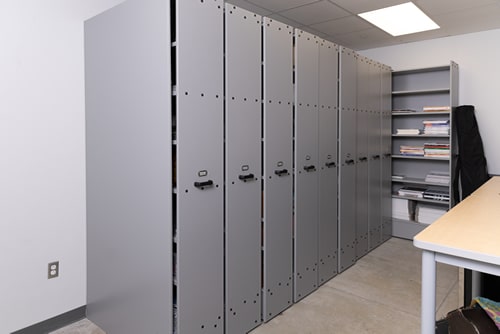
Storage systems in music rooms are handled constantly. When construction isn’t engineered for that reality, systems degrade slowly. Frames are strained. Shelves sag. Doors misalign. And organization breaks down.
Disorganization isn’t always a behavior problem. Often, it’s a construction problem.
High-use environments demand structural integrity, reinforced joints, and materials chosen for durability. High-touch surfaces—shelves, liners, contact points—take the most abuse and should be designed accordingly. Precision manufacturing ensures consistency and allows systems to expand without losing alignment.
Well-built systems preserve organization over time. They support daily use without constant adjustment or repair, protecting both instruments and the learning environment.
The Space as a Quiet Partner
When music spaces are designed with intention, the environment stops demanding attention and starts supporting learning.
Students move with confidence. Teachers regain rehearsal time. Facilities teams spend less time reacting to problems. The room simply works—day after day, year after year.
At Bandstor by Marco, we see storage as part of the learning system. It shapes behavior, supports safety, protects valuable instruments, and reinforces the rhythm of a music program before the first note is played.
The best music spaces don’t try to be the star of the show. They quietly support focus, creativity, and performance—so students can do what they came there to do: make music.